sábado, 24 de agosto de 2013

El hipnotista: Lars Kepler, un thriller sueco

La película se basa en una novela escrita por dos escritores suecos que se esconden bajo el pseudónimo de Lars Kepler y hay quien dice (es lo típico) que es mucho mejor que lo que ha llegado a las pantallas. Pienso comprobarlo en cuanto pueda.

Pero ya las primeras imágenes de un Estocolmo gélido, gris y amenazador nos hacen pensar en ciencia-ficción, en Blade Runner, y el ritmo de los primeros minutos es trepidante.

 Dos escenas del crimen a las que asiste un solitario policia judicial que está de servicio esa noche y una familia casi al completo asesinada.

 Un hijo adolescente que ha conseguido sobrevivir a la masacre está inconsciente en el hospital y no hay ninguna pista sobre los crímenes.

 Otra hermana ingresada en un centro para jóvenes problemáticos podría ser el nuevo objetivo de un asesino en serie.

Una joven doctora le sugiere que consulte a un médico especializado en hipnosis y traumas graves pero este se resiste a hacerlo ya que ha sido acusado de falta de ética profesional en un caso anterior y desacreditado públicamente.

Cuando por fin decide iniciar el tratamiento del joven inconsciente, su propio hijo adolescente es secuestrado y no hay pistas sobre esta desaparición.

A partir de ahí, la historia se hace más compleja y menos creíble pero a pesar de todo se queda uno con ganas de conseguir el libro lo antes posible.


viernes, 16 de agosto de 2013

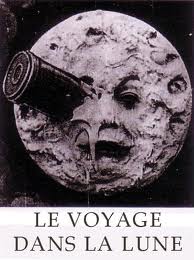
George Méliès: la magia del cine - The magic of film


En un día abrasador de Agosto en Madrid el entrar en el mundo fantástico y mágico de los inicios del cine mudo francés puede ser una gran idea.
 Y no sólo porque el aire acondicionado de la exposición de Caixaforum  haga desear haber llevado un chal o algo así.
 Es porque esa magia juguetona te atrapa durante horas en un recorrido inverso.
 Volvemos a la risa y al asombro de la infancia, al susto ante las fantasmagorías y los trucos de Méliès, que siempre fue un enamorado  de la magia, el humor  gamberro y/o macabro y la fantasía y al que esa pasión llevó a una vida de constante invención de historias, decorados, vestuario... en unos luminosos estudios de cine que creó en el jardín de su propia casa.
 Contrató actores, bailarinas, tramoyistas y realizó películas que tenían poco que ver con el cine que iniciaron los hermanos Lumiere, más realista y pegado a lo cotidiano.
Trabajó como actor en muchas de ellas, además de dirigirlas y producirlas.
 Tuvo éxito y sus películas fueron "pirateadas" en Estados Unidos pero con el tiempo su cine dejó de interesar y tuvo que vivir muy modestamente sus últimos años regentando una pequeña tienda de caramelos y chuches en una estación de tren,  olvidado por todos.
Martin Scorsese en una reciente película (titulada en España "La invención de Hugo") homenajea al gran creador francés al que vemos en sus últimos años de vida.
Para volver a soñar. O para llevar a tus hijos, sobrinos, nietos...

martes, 13 de agosto de 2013

Las leyes de la Naturaleza: Angeles Arrien


Monthly Reflection

Nature’s Laws of Governance

by Angeles Arrien

“The first dream of God is the wilderness which he spreads at our feet.”
                                    --C. A Meier, A Testament to the Wilderness
Mother Nature governs herself in three ways: (1) everything in nature is constantly creating and diversifying; (2) everything has a purpose for its existence; and (3) everything co-exists and fosters the principle of interdependence. Since we are also creatures of nature, we, too, innately relate to these principles. We have a basic need and instinct to create, to apply our gifts and talents in new and innovative ways in order to manifest something new. We all have a purpose and reason for being here, whether we discover it early in life, late, or not at all, and whether we choose to fulfill it or not. And while freedom and independence are available for us to exercise, our gifts and talents can only flourish within the principle of interdependence. Nothing survives in nature if it is fiercely independent or excessively dependent. The heart of interdependence requires collaboration and reciprocity.
We can benefit greatly from observing nature’s laws through the eyes of others. In his last book, The Wisdom of the Wilderness, renowned psychologist Gerald May describes how nature replenished him and provided comfort during the final year of his life. He felt an interconnectedness and mutual reciprocity that he found holy and transcendent. Poet Mary Oliver writes about her daily encounters with nature. Much of her writing is filled with gratitude for what she has been privileged to learn from, and witness in nature. She poignantly describes the insights she has gathered from nature that can be applied to her life and relationships, capturing the beauty and blessing of nature as well as her deep appreciation for these encounters.
The Book of Job tells us, “Speak to the Earth and it shall teach thee.” Also, many indigenous people worldwide believe that the natural world teaches us not only about our own nature, but about interdependence in relationship to our life’s purpose. These are some of nature’s essential gifts. When has the power of nature helped you gain clarity about your purpose; or when have you felt a sense of mutual reciprocity as you have applied your gifts and talents in new ways?
                 --Excerpts from Living in Gratitude, pages 134-136.                 
Practices and Reflection
  1. An exceptional example of a human being’s connection to Nature is Miyoko Shida Rigolo’s breathtaking performance in demonstrating the spectacular interface of what can be created from the profound power of interdependence between nature and the human spirit. Truly an extraordinary example of grace, beauty, balance, and heartfelt focus and intention! Notice what came up for you as you witnessed Nature’s Laws of Governance revealed in the creation of a moving mobile from a simple feather and tree branches. Nature always teaches us about the balance, beauty and interconnectedness that comes from following what has heart and meaning for us. Where in your life is this currently happening? What aspects of nature inspire your creativity? Where are you fostering collaboration, interdependence, cooperation, mutuality and reciprocity in your life at this time?
     
  2. The more quality time we spend in nature, the more we get in touch with our internal nature. What is your current relationship to nature and how much time do you spend outdoors in nature? What aspects of nature do you love the most–the mountains, deserts, waters, or deep woods? What are you currently learning from nature, and what is it teaching you when you speak to it? Give gratitude to what you have learned from nature this month, or from what has strengthened in your own nature this month.
     
  3. In a single generation, because of the use of computers and social networking, children do not spend much time in nature, and they suffer for this lack of connection to the natural world. Adults are not immune from this; we too, are experiencing what psychologists and teachers have identified as nature-deficit disorder, which is the subject of Richard Louv’s book, Lost Child of the Woods: Saving our Children From Nature Deficit Disorder. For the rest of this month, commit to spending one full hour outdoors everyday, to discover what nature mirrors back to you through Nature’s Three Laws of Governance.

domingo, 23 de junio de 2013

William Styron: darkness visible, a memoir of Madness. La depresión en primera persona.

Hablando con la protagonista femenina de Sophie´s choice, Meryl Streep.

Sólo alguien a quien no asustan las críticas o las controversias (ya había tocado en novelas anteriores temas muy complejos) puede ser capaz de un ensayo tan a tumba abierta como Darkness Visible.

Tras las críticas negativas  que se hicieron tras el suicidio de escritores como Primo Levi, William Styron habla de sus experiencias de depresión y de las de otras personas cercanas a las que aparentemente la vida les sonreía y el éxito acompañaba sus publicaciones pero que tuvieron en ocasiones un final trágico sin poder recibir ayuda de sus amigos o familiares.

  Intenta así acabar con el estigma de esta enfermedad explicando el indescriptible sufrimiento que la acompaña y que hace tan difícil la comunicación con los médicos o la familia del enfermo. Piensa que quizá sea más fácil así la prevención del suicidio.

Se publicó inicialmente como un artículo que apareció en Vanity Fair y más tarde apareció en forma de un apasionante ensayo publicado por Random House en 1992.


Darkness Visible

Styron's influence deepened and his readership expanded with the publication of Darkness Visible in 1990. This memoir, which began as a magazine article, chronicles the author's descent into depression and his near-fatal night of "despair beyond despair". was the first, and possibly the most vivid and insightful, first-hand account of a major depressive episode to date. The memoir greatly increased knowledge and decreased stigmatization of major depressive disorders and suicide. It increased understanding of the phenomenology of the disease among sufferers, their loved ones, and the general public as well. Earlier, in December 1989, Styron had written an op-ed for the New York Times responding to the disappointment and mystification among scholars about the apparent suicide of Primo Levi, the remarkable Italian writer. Styron noted in an article for Vanity Fair "the pain of severe depression is quite unimaginable to those who have not suffered it, and it kills in many instances because its anguish can no longer be borne. The prevention of many suicides will continue to be hindered until there is a general awareness of the nature of this pain. Through the healing process of time—and through medical intervention or hospitalization in many cases—most people survive depression, which may be its only blessing; but to the tragic legion who are compelled to destroy themselves there should be no more reproof attached than to the victims of terminal cancer."

Later work and acclaim

Styron was awarded the Prix mondial Cino Del Duca in 1985.
His short story "Shadrach" was filmed in 1998, under the same title. It was co-directed by his daughter Susanna
Other works published during his lifetime include the play In the Clap Shack (1973), and a collection of his nonfiction, This Quiet Dust (1982).
French President François Mitterrand invited Styron to his first Presidential inauguration, and later made him a Commander of the Legion of Honor.[12] In 1993, Styron was awarded the National Medal of Arts.[13]
In 2002 an opera by Nicholas Maw based on Sophie's Choice premièred at the Royal Opera House in Covent GardenLondon

miércoles, 19 de junio de 2013

La trilogía del Baztán: el guardián invisible. Dolores Redondo


Es novela negra. Pero no es la típica novela negra. Lo único malo que tiene es que El guardián invisible   se termina y Dolores Redondo no ha publicado todavía la continuación de esta oscura y a veces asfixiante historia de una joven inspectora de homicidios, Amaia Salazar, que regresa a su pueblo para investigar unos extraños crímenes. Esta vuelta a un pasado que sigue pesando sobre ella crea una atmósfera opresiva y agobiante que se mantiene hasta el desenlace final de la investigación.

domingo, 19 de mayo de 2013

Searching for sugar man: un documental o una historia de detectives con final feliz


Un joven director sueco decide realizar un documental de 9 minutos para la televisión  a partir  en una  historia que escucha sobre un músico de Detroit  que grabó un par de discos en los años 70 y a pesar de las buenas críticas no consiguió el éxito comercial en los Estados Unidos.  El que este cantante se negara a cambiar su apellido  (como en su momento tuvo que hacer Bob Dylan, al que muchos le compararon en su momento) y la contundencia de sus letras podrían explicar todo eso.
Sin embargo, en la Sudafrica del apartheid las  canciones de su disco Cold Facts se graban en cassettes y pasan de mano en mano como   en un auténtico símbolo de la lucha contra un sistema racista e injusto. Algunos de sus admiradores intentan averiguar qué sucedió con su héroe desaparecido y su búsqueda obtiene resultados inesperados y sorprendentes.
El documental se llama Searching for sugar man, ha recibido infinidad de premios y tiene una banda sonora realmente emocionante.


Rodriguez is sweeter than sugar, man | StarTribune.com

He seemed frail when escorted onstage by two women Wednesday at the sold-out Fitzgerald Theater in St. Paul. But then he put on his dark-tinted glasses, his floppy black hat and his beige guitar and suddenly he transformed into Rodriguez, musician of mystery, melancholy and that Oscar-winning movie.
“Searching for Sugar Man,” which took the Academy Award this year for best documentary, told the story of an obscure Detroit folk-rock singer whose two albums from the early 1970s had somehow made him into a beloved cult hero in South Africa. Two obsessive fans there started searching for the singer, thought to be dead, and not only found him in Detroit but then brought him to South Africa for a series of major concerts in the late 1990s. It was all filmed and eventually turned into a 2012 movie.
It’s a fascinating story and a terrific footnote in rock history — that Rodriguez’s career was relaunched by an Oscar-honored movie.
And Rodriguez’s concert at the Fitzgerald was as winning as the movie. Maybe more so.
Rodriguez, 70, is a star who is masterful at playing the anti-star. With his face framed by long hair and that floppy hat pulled down low, he seemed painfully shy, like the man in the documentary who played with his back to the audience early in his career. Between songs in St. Paul, he was quiet at first, then told a silly old joke about Mickey Mouse, Minnie and Goofy and eventually segued into witty comments and self-deprecating humor.
“I’m a solid 70,” he said. “On May 9, I received a doctorate at Wayne State University. [He also has a B.A. from there in philosophy.] I don’t know if that means I’m smart — or educated. I want everyone to know that I want to be treated like an ordinary legend.”
Perfectly put.
Not only did Rodriguez prove to be funnier than expected but also more musically satisfying than the movie or its soundtrack suggest. While his songs clearly owe a debt to 1960s Bob Dylan and Leonard Cohen, Rodriguez demonstrated a gift for writing lyrics and melodies, a flair for expressing sadness and sweetness. The guy is unquestionably a romantic (he crooned the Flamingos’ “I Only Have Eyes for You” as if it were a jazz standard) even if the heartbreak songs like “Forget It” had more impact.
Unfortunately, he didn’t have the vocal bite to match the bitterness of his lyrics. Backed by a trio that played at living-room volume, his voice was soft and thin. His phrasing was positively Dylanesque at times but he never punched his words for emphasis the way the bard does. Interestingly, the only times Rodriquez raised his voice in song were on Dylan’s “Like a Rolling Stone” and a bluesy treatment of Little Richard’s “Lucille.”
Rodriguez also offered political pieces, which helped to make him a hero in South Africa with both blacks and liberal Afrikaner youth. Though dated in its talking-blues style, the message of “This Is Not a Song, It’s an Outburst: Or, the Establishment Blues” still resonated with the singer’s worshipful audience in St. Paul.
The crowd cheered at the opening notes of several songs from “Searching for Sugar Man.” Two insistent fans kept shouting a request for “Cause,” a tune from the movie.
Finally, Rodriguez, who had been hunched over with posture that suggested Neil Young, looked up and explained. “It’s such a brooding song. I try to keep it light. It’s too pensive sometimes. But thanks for asking.”
That may be one of the best rejoinders to a song request ever uttered. But what else would you expect from an anti-star who exuded a peaceful calm all night, even when singing about heartbreak and pain. After all, how can you argue with a mysterious hipster folk-rocker who philosophizes to his fans: “Hate is too powerful an emotion to waste on someone you really don’t like.”
For a set list: www.startribune.com/artcetera
Twitter: @JonBream • 612-673-1719


http://movies.nytimes.com/2012/07/27/movies/malik-bendjellouls-searching-for-sugar-man.html?_r=1&

domingo, 5 de mayo de 2013

Dalí: Misterios, enigmas y angustias

Salvador Dalí


El Reina Sofía presenta en Madrid más de 200 obras de Salvador Dalí, algunas de ellas expuestas en España por primera vez. Sus textos son tan sorprendentes como sus dibujos y pinturas. En uno de ellos dice que el espectador disfruta de los "misterios, enigmas y angustias" que encuentra en sus obras. Y desde luego hoy cientos de personas disfrutaban del siempre joven Dalí.